
We want to buy one UK manufacturing business, and run it ourselves.
We are a family that has been in manufacturing since 1946, not a fund. We are looking for one established business whose owner is thinking about the next chapter, and we intend to own and run it, on site, for the long term.
Every conversation is confidential and commits you to nothing.
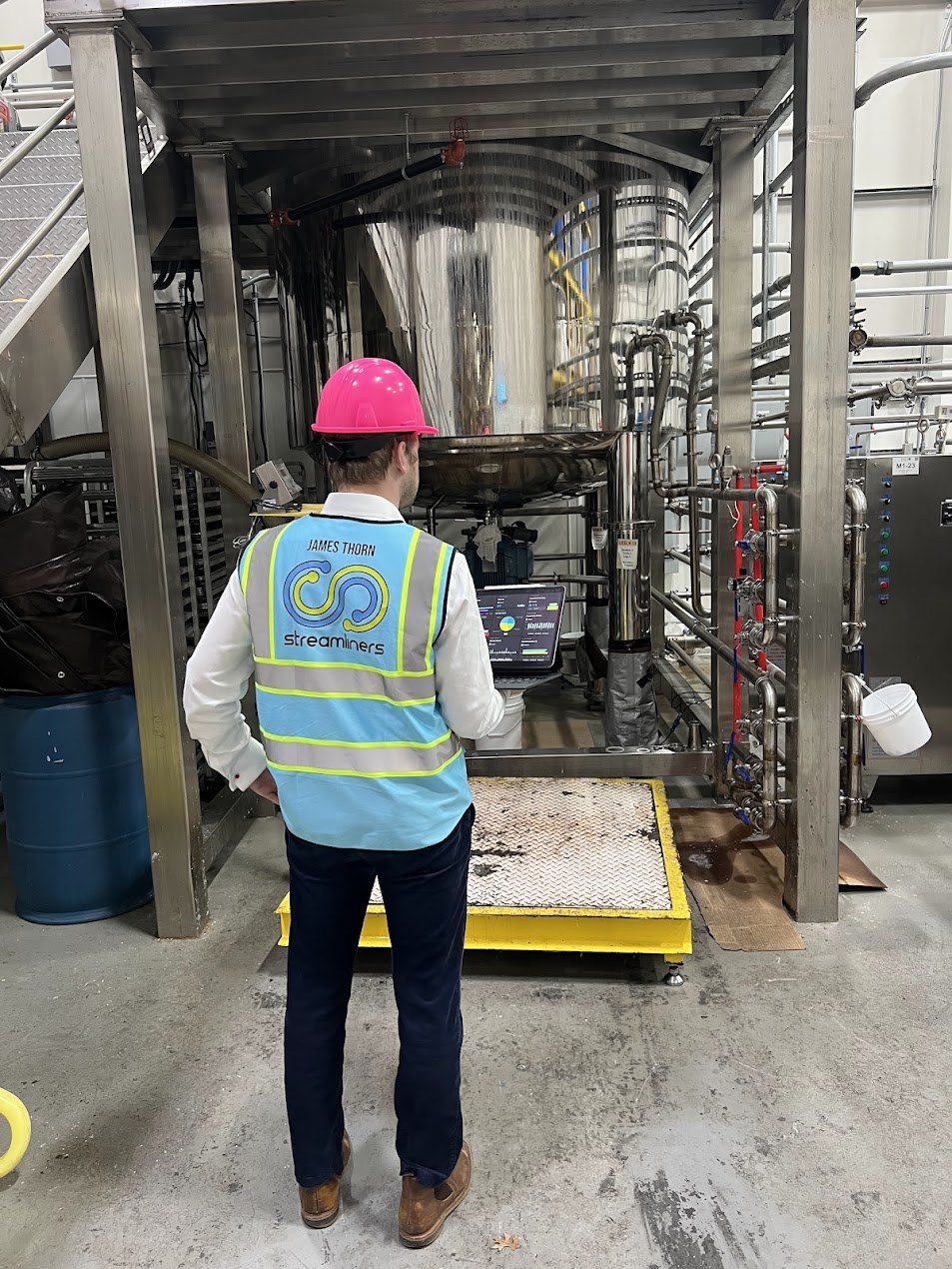
James on a client's production floor. This is where the work gets done.
Fully funded, and ready
The money is committed and in place. There is no fund to raise after we meet and no committee to persuade. When we make an offer, we can complete it.
One business, chosen carefully
We will buy one business, and we would rather wait for the right one than settle for the wrong one. So we are particular, and if we have written to you, it is because we think yours could be the one.
The atmosphere matters
We will be working alongside the team every day, so how a place feels matters to us as much as how it performs. We are looking for a business where people take pride in their work, and stay.
What makes us different
Most buyers of businesses like yours are funds, or larger competitors. We are neither, and the difference shows in how your business is treated after the sale.
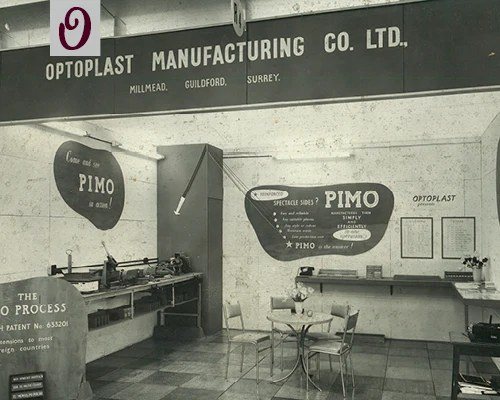
Optoplast Manufacturing, Millmead, Guildford, where the family business began in 1946. From the Millmead archive.
A family, in manufacturing for eighty years
The Thorns have been in manufacturing since 1946, when James's grandfather co-founded what is now Millmead Optical Group. Three generations on, it is still family owned and still making things in Liverpool. We know what a family business is, because we are one.
Manufacturing from the inside
We are engineers by training, and between us we have seen the inside of more than fifty factories, across food, pharmaceuticals, chemicals, building materials and industrial equipment. That experience was gained on shop floors, not in boardrooms.
On the shop floor, every day
After the sale we will be in the business ourselves: James in the factory every day with the people who make the product, Alex on the numbers and the systems behind it. That is where a manufacturing business is run well or badly, and it is where we will be. Not a manager you have never met, reporting to a board you will never see.
Careful, thorough work
We measure before we act. Most teams already know what is wrong with their business; what they lack is the time to pick the few things that matter most and the support to fix them properly. We bring the priorities, the tools and the backing, and we let the team get on with it.
We buy to keep
There is no fund, no fund life and no exit timetable. We are buying one business to own and run for the long term, and to build over decades, the way our own family business has been built.
A note to owners
You have probably had letters before. Most come from brokers with a list to fill, or from funds that would buy your business and hand it to someone you have never met.
We are different in a way you can check. My family has been in manufacturing since 1946, when my grandfather co-founded what is now Millmead Optical Group. It is still family owned, and my father is its chairman. I trained as a manufacturing engineer, started out at a machinery maker on the Wirral, and have spent my career inside factories in Britain and North America, improving how they run.
My brother Alex and I want to buy one business and run it, for the long term. If that sounds like a conversation worth having, I would be glad to hear from you. It is confidential, it costs nothing and it commits you to nothing.
James Thorn
Partner, Thorn Industrial Partnership
The track record behind this letter
Eighty years of family manufacturing
Millmead Optical Group, started in 1946 by our grandfather and still owned by the founding families.
Our family businessMore than fifty factories
Between us we have worked inside more than fifty manufacturing businesses in Britain and North America, from food and pharmaceuticals to chemicals, building materials and industrial equipment.
James's career on LinkedInEngineers first
Manufacturing engineering for James, mechanical engineering for Alex, both at Cambridge, and a first job designing machinery. We understand a factory from the machine up.
Owners who will vouch for us
Owners and managing directors we have worked alongside are glad to take a call. Ask for an introduction.
How we compare with other buyers
Every buyer will tell you they care about the business. The useful questions are who runs it afterwards, how long they keep it, and whose money it is.
What matters to you
A private equity fund
A trade buyer
Thorn
Who runs it after the sale
A manager hired by the fund, reporting to a board
The buyer's existing management
We do, with James on site every day
How long they keep it
Sold on again, usually within three to seven years
Usually folded into the buyer's own business
Owned for the long term. No fund life and no exit date
Whose money it is
Institutional investors, through a fund
The buyer's own balance sheet
Our own, from our careers and our family business
Who you deal with
A deal team, then an investment committee you never meet
Corporate development, then head office
The people who will own and run it, from first call to completion
The name, the site and the team
Kept while the plan requires it
Often merged, moved or cut back
Kept. They are what we are buying
Keeping a stake yourself
Sometimes, on the fund's terms
Rarely
Yes, if you want to. A full sale or a partial one, your choice
What we are looking for
One well-run UK manufacturing business whose owner wants it to carry on in good hands. We will only ever buy one, so we are particular about which. We are at our best in a business that has more demand than it can serve.
The business
Based in the UK, making products that customers buy again and again and would find hard to replace. Any kind of manufacturing, from engineering and fabrication to food, chemicals and consumer goods.
Profits of roughly £500,000 to £1 million a year, on turnover of a few million pounds.
Established for ten years or more, with a spread of customers and a team that knows its work.
Profitable and well run, with room to do more. We are not looking for a business that needs rescuing, but for one that has more in it than its owner has had the time to get out.
A good atmosphere: a team that takes pride in the work and stays. We will be there every day, so this matters to us as much as the numbers.
The owner
A founder or family owner starting to think about retirement, succession or simply the next chapter.
Or an owner who is not ready to stop, but would like to take some money off the table and stop carrying all the risk alone.
Someone who cares what happens to the business, its name and its people after the sale.
Willing to help with a proper handover, on a timescale that suits you, and free to stay involved, or not, for as long as you choose.
We are not the right buyer for start-ups, businesses in serious difficulty, businesses that depend on a single customer, or groups of companies to be bought and merged together. If yours is not a fit for us, we will say so quickly and, where we can, point you towards someone who is.
A full sale, or a partial one
There are two ways to do this, depending on what you want from it. Both start with the same conversation.
A full sale
You sell the whole business and hand over on a timescale we agree together. The right choice if you are ready to retire, or to do something else with your time. You get a clean exit, a proper handover, and the knowledge that the business is in the hands of people who will run it, not trade it.
A partial sale
You sell part of the business, often half, and keep the rest. We take on the running of it, you keep a stake and a say, and you take out some of the value you have built without walking away. It suits an owner who wants to take some money off the table and step back from the day-to-day, but is not ready to leave and would like a share in what the business becomes.
You keep the parts you love. We take on the parts you don't.
Either way, the name, the site and the team stay, and the price and the arrangement are explained plainly before you decide anything.
What we will do, and what we will not
Written down here so that you can hold us to it.
We will
Keep the name, the site and the team. They are what we are buying.
Run the business ourselves, with James on site every day.
Keep investing in it: in equipment, in people and in the way the work gets done.
Treat every conversation as confidential until you decide otherwise.
Explain our offer in plain English, with the reasoning behind the number.
Agree your role after the sale with you, not for you.
Look after the atmosphere of the place. How it feels to work there is part of what we are buying.
We will not
Buy it in order to sell it on. There is no fund with a clock, and no date by which we have to exit.
Merge it into something else, move production, or change what makes it work.
Put a layer of management between the team and the people who own the business.
Approach your staff, customers or suppliers before you are ready.
Keep you waiting. If it is not a fit, we say so within a week.
Change an agreed price, unless we find something material that neither of us knew.
Impose change from above. Improvements happen with the team, not to it.
How a sale to us works
In stages you control. You can stop at any point, and most of it happens at your pace.
1
A first conversation
Half an hour with James, on the phone or over a coffee, wherever suits you. No documents and no obligation. If either of us thinks it is not the right fit, we say so and part on good terms.
2
Getting to know each other
We sign a confidentiality agreement before you share anything. Then we ask for the basics: recent accounts, a picture of your customers and products, and how the business runs day to day. We come and walk the factory, and you get the measure of us.
3
An offer in writing
Usually within six weeks of first meeting. It sets out the price, how it is paid, whether it is a full or a partial sale, and the reasoning behind it, in plain English, so that you can weigh it up with your own advisers.
4
Confirming the detail
Once we agree terms, our advisers confirm what we have been told. We keep this proportionate and predictable, and you deal with the same two people throughout, not a deal team. Typically eight to twelve weeks from agreed terms to completion.
5
Handover, your way
Before completion we plan the handover together: what the team is told and when, how customers hear about it, and how long you stay involved. Then we get on with running the business.
Get in touch
Start with a conversation.
Ring or email James directly. If you would rather not talk during working hours, say so and we will fit around you. We are based in London and Cheshire, and we will come to you.
Advisers and intermediaries acting for an owner are welcome to use the same details.